More Than an Annoying Bite: Understanding Mosquito Problems Around Your Property
A backyard should be somewhere you can relax—not somewhere you spend the evening constantly swatting mosquitoes.
Unlike many household pests, mosquitoes create a concern that extends beyond inconvenience. Female mosquitoes require blood meals to produce eggs, and some mosquito species can transmit disease-causing pathogens between hosts.
The most effective way to deal with mosquitoes therefore begins before the bite—by understanding where they reproduce and what makes a property attractive to them.
Your Yard May Be Providing Mosquitoes With a Nursery
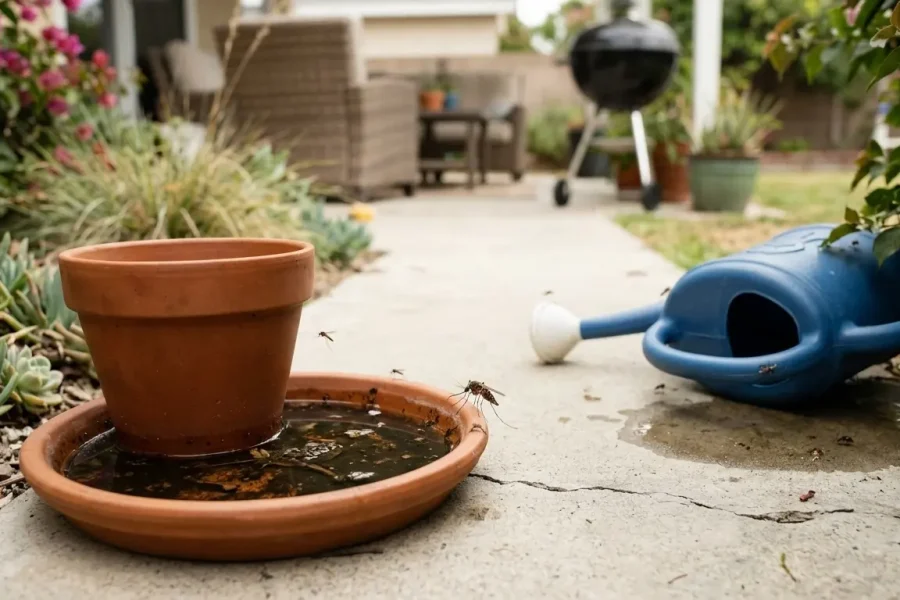
Mosquito development begins in water.
Depending on the species, surprisingly small collections of standing water can provide suitable breeding conditions. Around residential properties, potential sources can include:
- Plant saucers
- Buckets and containers
- Clogged gutters
- Bird baths
- Children’s outdoor toys
- Tarps that collect rainwater
- Poorly drained areas
- Unmaintained water features
This is why mosquito prevention is not simply about treating flying adults. Removing or managing breeding sources is a critical part of control.
Why Mosquitoes Are a Health Concern
Mosquito bites commonly cause itching, redness, and irritation. Scratching bites can also damage the skin and occasionally contribute to secondary infection.
More importantly, certain mosquito species are capable of transmitting pathogens. In California, public-health agencies monitor mosquito-borne diseases, including West Nile virus, because infected mosquitoes can transmit the virus to people.
The actual risk varies by location, mosquito species, season, and disease activity. A mosquito sighting does not mean that the insect is infected, but reducing unnecessary mosquito exposure remains a sensible part of protecting outdoor spaces.
What Diseases Can Mosquitoes Spread?
Mosquitoes are more than irritating biting insects—certain species can act as disease vectors and transmit viruses or parasites between hosts. Mosquito-borne diseases include West Nile virus, dengue, Zika, chikungunya, malaria, yellow fever, and several forms of mosquito-borne encephalitis. In the United States, West Nile virus is the leading cause of mosquito-borne disease in the contiguous states, while Aedes, Culex, and Anopheles mosquitoes are among the important groups capable of spreading different pathogens. Not every mosquito carries disease, but because an infected mosquito cannot be identified simply by looking at it, preventing bites and reducing mosquito breeding areas around homes remain important protective measures.
Why Do Some Homes Seem to Have More Mosquitoes?
Mosquito activity around a property depends on more than standing water.
Dense vegetation, shaded and humid resting areas, irrigation, drainage conditions, nearby breeding habitats, and seasonal weather can all influence mosquito populations.
A property may therefore continue experiencing mosquitoes even when the homeowner keeps the interior extremely clean. The source may be outdoors—or even beyond the immediate property boundary.
This makes inspection and source identification especially important.
Mosquitoes and the Environment: Why Targeted Control Matters
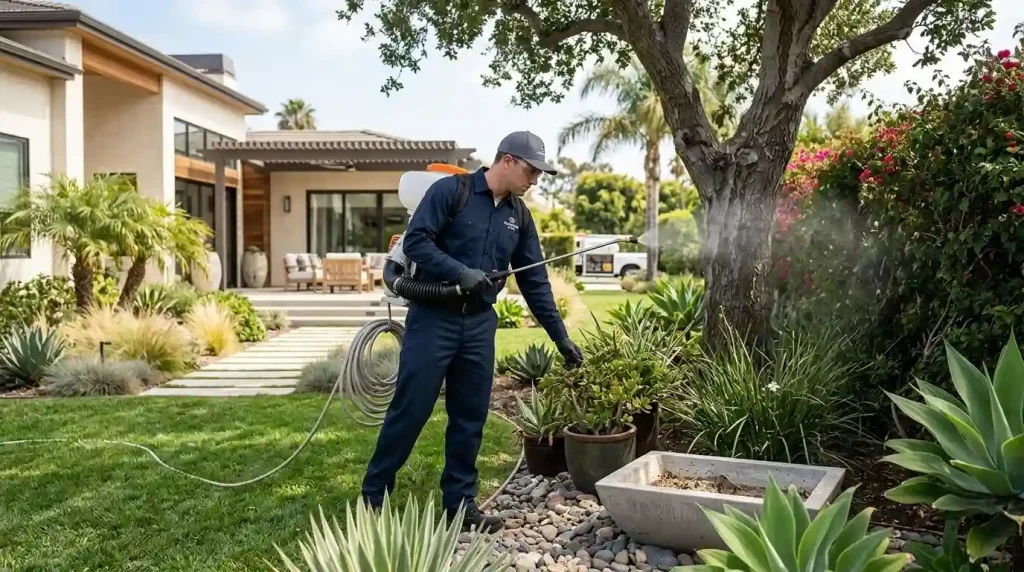
Mosquitoes are part of natural ecosystems and can serve as food for other organisms. For that reason, responsible mosquito management should focus on reducing problematic populations and breeding opportunities around people rather than treating every outdoor insect as a target.
Source reduction, property maintenance, and appropriately selected treatments can form part of an integrated approach to Mosquito Control.
Four Practical Ways to Reduce Mosquito Activity
Remove standing water. Regularly empty containers that collect unnecessary water and correct drainage issues where practical.
Maintain outdoor areas. Managing excessive vegetation and clutter can reduce some sheltered resting locations.
Maintain screens and entry barriers. Repair damaged window and door screens to help prevent mosquitoes from entering indoor spaces.
Pay attention to recurring activity. Heavy mosquito activity despite routine prevention may indicate breeding sources that are difficult to locate or control without a more detailed assessment.
When Is Professional Mosquito Control Worth Considering?
An occasional mosquito outdoors is normal. Persistent or heavy mosquito activity is different.
Professional Mosquito Control may be appropriate when mosquitoes regularly prevent you from using your yard, breeding sites are difficult to identify, the problem repeatedly returns, or a property requires a more structured prevention program.
A professional inspection can help identify conditions contributing to mosquito activity and determine which management methods are appropriate for the property.
Preparing for a Professional Mosquito Control Visit
Before your scheduled service, check the property for obvious water-holding containers and remove unnecessary standing water where possible.
Keep treatment areas accessible and tell the technician about ponds, pools, pets, children’s play areas, gardens, or other areas requiring special consideration. Follow all service-specific instructions regarding preparation and when outdoor areas can be used again.
These details help the technician plan treatment around the actual characteristics of your property.
Take Back Your Outdoor Space
Mosquito management works best when prevention and professional treatment address the conditions allowing mosquitoes to reproduce and remain around the property.
Pest Control Elite provides professional Mosquito Control and Pest Control Services in California for homeowners and businesses seeking practical, property-specific pest management solutions.
Mosquitoes Taking Over Your Yard?
Contact Pest Control Elite to schedule an inspection and discuss the right mosquito-control approach for your property.
Related Services: Mosquito Control | Residential Pest Control | Recurring Pest Control | Pest Inspection
Still have any question?
call us
+1 (833) 659-0907
1416 N San Pablo Ave, Fresno, CA 93728, USA