Bed Bugs: The Hidden Pest That Can Turn a Comfortable Bedroom Into a Daily Problem
You go to sleep normally.
The next morning, you notice several itchy marks on your skin. A few days later, there are more. Then you notice tiny dark spots near the edge of your mattress.
The problem may not be mosquitoes or an allergic reaction. Bed bugs could be hiding only a few feet away from where you sleep.
Bed bugs are particularly troublesome because they are small, secretive, and skilled at hiding in narrow spaces. They feed primarily at night and can remain unnoticed until their population becomes established.
Unlike pests attracted mainly by dirty environments or exposed food, bed bugs can infest clean and well-maintained properties too.
Why Do Bed Bugs Come Into a Home?
One of the biggest misconceptions about bed bugs is that they appear because a house is dirty.
That is not necessarily true.
Bed bugs are primarily hitchhiking pests. They can be transported from one location to another in belongings and objects.
They may travel through:
- Luggage after travelling
- Clothing and bags
- Used furniture
- Mattresses and bedding
- Personal belongings
- Items moved between infested locations
- Multi-unit residential environments
Hotels, apartments, dormitories, transportation environments, and other locations with frequent human movement can provide opportunities for accidental transportation.
Once inside a property, bed bugs seek hiding locations close to people because they depend on blood meals for survival.
Where Are Bed Bugs Actually Hiding?
The name “bed bug” can make people think they live only inside mattresses.
Unfortunately, their hiding range can be much wider.
Common locations include:
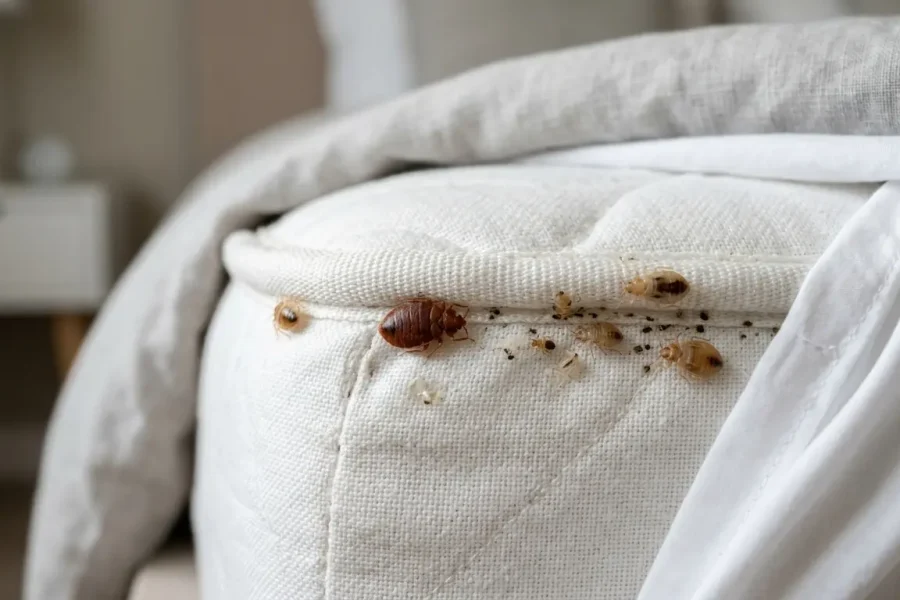
Mattress seams and labels
Their flattened bodies allow them to hide along narrow seams.
Box springs and bed frames
Cracks, joints, screw holes, and structural gaps can provide protected spaces.
Headboards
Particularly around joints and areas close to the wall.
Furniture
Sofas, chairs, bedside furniture, and upholstered items may harbor bed bugs.
Baseboards and wall cracks
As an infestation develops, bugs may be found farther away from the bed.
This ability to hide is one reason an infestation can be difficult to eliminate using casual DIY methods.
Do Bed Bugs Spread Diseases?
Here, an important distinction is necessary.
Unlike mosquitoes, ticks, or certain other disease vectors, bed bugs are not currently known to transmit diseases to people.
However, that does not make an infestation harmless.
Bed bug bites can cause itching, redness, swelling, and irritation, although individual reactions vary considerably. Some people show little or no visible reaction, while others may develop more noticeable symptoms.
Excessive scratching can damage the skin and potentially contribute to secondary skin infection. In addition, persistent infestations may contribute to anxiety and loss of sleep.
So the major health burden of bed bugs is generally related to bites, allergic reactions in some individuals, secondary effects of scratching, and the disruption caused by an ongoing infestation, rather than disease transmission.
The Clues Bed Bugs Leave Behind
Bed bugs are experts at hiding, but they often leave evidence.
- Live Bed Bugs
Adult bed bugs are small, flat, oval insects. Their appearance changes somewhat after feeding.
- Dark Spots
Small dark or rusty-looking spots around mattresses or bedding may warrant closer inspection.
- Shed Skins
As immature bed bugs develop, they shed their outer covering.
- Eggs and Eggshells
Tiny pale eggs can be difficult to notice without careful inspection.
- Unexplained Bites
Repeated bites noticed after sleeping can be a warning sign—but bites alone cannot reliably confirm a bed bug infestation because many skin conditions and other insects can cause similar reactions.
Finding the insect or other physical evidence provides much stronger confirmation.

Why Can Bed Bugs Become So Difficult to Eliminate?
Think of the infestation as an iceberg.
The bugs you notice represent only what is visible. Others may remain hidden inside furniture, mattress structures, cracks, or surrounding areas.
Bed bugs also progress through multiple life stages. Eliminating some exposed insects while missing eggs or hidden bugs may allow activity to continue.
Another complication is that some bed bug populations have developed resistance to certain insecticides.
For these reasons, successful control often requires careful inspection, correct identification, appropriate treatment selection, and follow-up, rather than simply spraying the mattress.
What NOT to Do When You Discover Bed Bugs
Panic can make the problem harder to manage.
Avoid immediately moving infested furniture through multiple rooms, because this can potentially spread bugs to new locations.
Do not start applying random pesticides or household chemicals to mattresses, furniture, or your skin.
And do not assume that simply throwing away the mattress will solve the infestation. Bed bugs may already be hiding elsewhere in the room.
Instead, first determine the extent of the problem.
What Can You Do Before Professional Treatment?
There are several useful steps.
Keep potentially infested belongings organized rather than moving them unnecessarily between rooms.
Wash and dry appropriate fabrics according to suitable care instructions, using heat where appropriate.
Reduce clutter around sleeping areas so potential hiding locations are easier to inspect.
Vacuuming can help physically remove some insects and debris, but it should be treated as part of management—not necessarily a complete solution.
Most importantly, follow the preparation instructions given by your pest-control provider, because the required preparation can vary according to the treatment method.
When Is Professional Bed Bug Treatment Appropriate?
Professional assistance becomes especially valuable when:
- Live bed bugs are confirmed
- Evidence appears in multiple areas
- The infestation repeatedly returns
- DIY attempts have failed
- Several rooms may be affected
- The source or extent of infestation is unclear
A professional inspection can determine where activity is concentrated and help establish an appropriate treatment strategy.
Sleep Comfortably Again With Pest Control Elite
Bed bugs are not a reflection of how clean your home is. But once established, they deserve prompt and systematic attention.
Pest Control Elite provides professional Bed Bug Treatment and Pest Control Services in California, helping homeowners and businesses identify bed bug activity and develop an appropriate management approach.
Think You May Have Bed Bugs?
Contact Pest Control Elite to schedule a professional pest inspection and discuss your bed bug treatment options.
Related Services: Bed Bug Control | Pest Inspection | Residential Pest Control | Recurring Pest Control
Still have any question?
call us
+1 (833) 659-0907
1416 N San Pablo Ave, Fresno, CA 93728, USA