Rats and Mice Inside Your Property: A Problem You Shouldn’t Ignore
Sometimes the first sign is not a rat.
It is a scratching noise coming from the wall after dark.
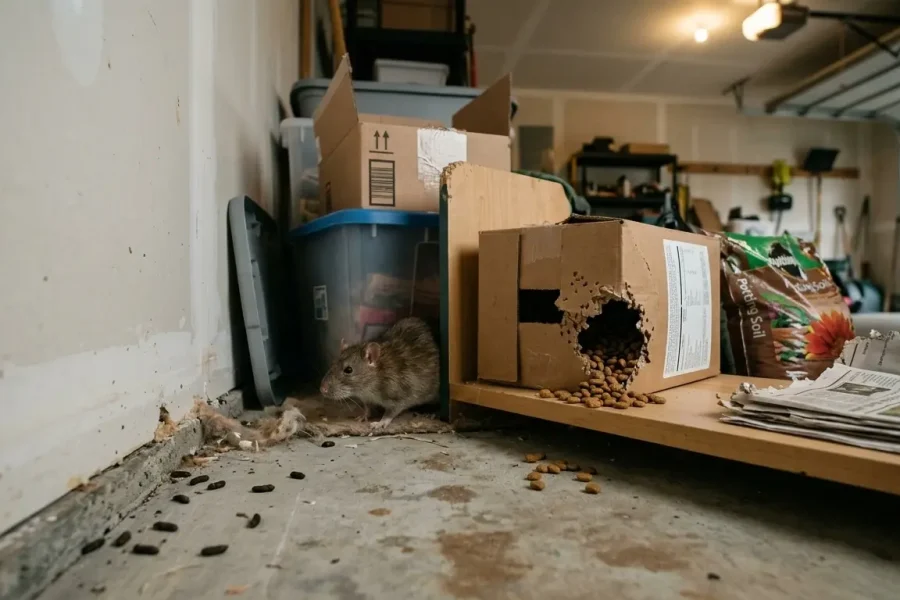
Then you notice small droppings inside a cabinet. A food package has been chewed. Perhaps there is a strange odor near the garage.
These clues can point toward one of the most troublesome property pests: rodents.
Rats and mice seek the same basic resources humans provide—food, water, shelter, and warmth. Once they establish themselves inside a property, the concern goes beyond damaged food packages. Rodents can contaminate environments, damage materials, and expose people to disease-causing organisms.
What Diseases Can Rats and Mice Spread?
This is a major reason a rodent infestation should be handled carefully.
CDC identifies multiple diseases associated with rodents, including hantavirus infections, leptospirosis, rat-bite fever, salmonellosis, lymphocytic choriomeningitis (LCM), and tularemia, although which diseases are relevant varies by rodent species, geography, and exposure. Some rodent-associated diseases can also be transmitted indirectly through fleas, ticks, or mites. CDC
Hantavirus
People can become exposed to hantaviruses through infected rodents, particularly through contact with urine, droppings or saliva. In the U.S., the deer mouse is an important host for the virus most commonly associated with hantavirus pulmonary syndrome. CDC
Leptospirosis
Leptospira bacteria can be associated with infected animal urine, including rodent urine. Exposure can occur through contaminated environments.
Salmonellosis
Rodents can contaminate food or environments with germs such as Salmonella, creating another reason to keep them away from food-storage and preparation areas. CDC
Rat-Bite Fever
Rat-bite fever is a bacterial infection associated with contact with infected rodents. Despite the name, exposure is not limited conceptually to seeing a visibly sick rat—rodents carrying the bacteria may appear healthy. CDC notes that rat-bite fever is rare in the United States but can become serious without appropriate treatment. CDC
Important: Finding rodents does not mean your household has any of these diseases. The risk depends on the rodent, pathogen, location, and type of exposure. The practical goal is to avoid direct contact and safely control the infestation.
Which Rodents Commonly Become Property Pests?
“Rodent” is a broad biological group, but several species are especially relevant around U.S. buildings.
House Mouse
Small size allows house mice to exploit tiny openings. They can establish themselves close to food and shelter inside buildings.
Norway Rat
These relatively robust rats are often associated with ground-level areas and burrowing environments.
Roof Rat
Roof rats are strong climbers and may use elevated areas such as roofs, trees, attics, and upper structural spaces.
Deer Mouse
Deer mice are particularly important from a public-health perspective because they can carry hantaviruses associated with hantavirus pulmonary syndrome in the United States. CDC
Correct identification helps professionals understand likely nesting behavior, travel routes, and entry points.
Why Are Rats and Mice Entering Your Home?
To a rodent, a building can provide an excellent survival environment.
They may find:
Food: pantry goods, crumbs, garbage and pet food.
Water: plumbing leaks, pet bowls and moisture sources.
Shelter: attics, garages, crawl spaces, storage rooms and wall voids.
Entry: structural gaps, damaged vents, utility penetrations, doors and other openings.
As outdoor conditions or food availability change, buildings may become particularly attractive sources of shelter.
How Can Rodents Damage Your Property?
Disease is not the only concern.
Gnawing Damage
Rodents have continuously growing incisors and regularly gnaw on materials. Damage can affect packaging, wood, insulation, plastic and other building materials.
Electrical Concerns
Gnawing on wiring can damage electrical insulation and create a potentially serious property hazard.
Food Loss and Contamination
Food packages may be chewed open, while droppings, urine or other contamination can make stored products unsuitable for use.
Insulation and Nesting Damage
Rodents may disturb insulation and use paper, fabric, cardboard and other materials for nesting.
Odor and Sanitation Problems
Urine, droppings, nesting material and dead rodents can produce unpleasant odors and create sanitation concerns.
Signs You May Have a Rodent Infestation
Do not wait until you see a rat running across the room.
Look for:
- Rodent droppings
- Gnaw marks
- Scratching or movement sounds at night
- Damaged food packaging
- Nesting material
- Greasy rub marks along travel routes
- Unusual odors
- Holes or potential entry points
- Actual rat or mouse sightings
Multiple signs make a professional inspection increasingly worthwhile.
A Critical Safety Point: Don’t Sweep Rodent Droppings Dry
Rodent cleanup deserves special care.
CDC advises against sweeping or vacuuming rodent urine, droppings, or nesting materials before they have been properly disinfected, because disturbing contaminated material can put particles into the air. CDC provides specific procedures for safely cleaning rodent-contaminated areas. CDC
For a substantial infestation or heavily contaminated area, professional assistance may be appropriate.
Two Practical Tips to Help Prevent Rodents
Tip 1 — Remove Their Food Supply
Store food in secure containers, clean crumbs and spills, manage garbage carefully, and avoid leaving pet food accessible overnight where practical.
Tip 2 — Block the Route Into the Building
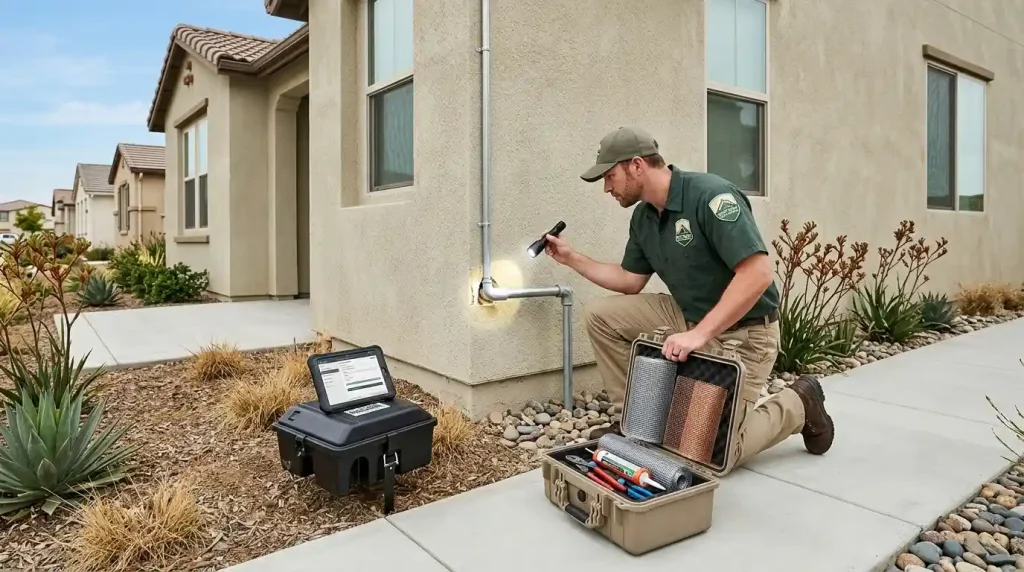
Look for gaps around doors, vents, utility penetrations, foundations, roofs, garages and other structural openings.
Removing rodents without correcting entry points can allow the problem to return.
Why Professional Rodent Control Can Be Important
Rodent management is not simply about placing a trap where a mouse was seen.
Effective Rodent Control may require identifying the species, locating travel routes and nesting areas, assessing contamination, finding structural entry points, selecting suitable control methods, and reducing the conditions that attracted the rodents.
This combination of inspection + control + exclusion + prevention is much more useful for long-term management than repeatedly dealing with individual animals.
Protect Your Property With Pest Control Elite
If you hear scratching in the walls, discover droppings, or repeatedly see rats or mice, delaying action can allow the infestation to expand.
Pest Control Elite provides professional Rodent Control California services for homes and businesses. Our pest management approach focuses on identifying rodent activity, locating potential entry points, addressing the infestation, and helping reduce the conditions that allow rodents to return.
Seeing Signs of Rats or Mice?
Contact Pest Control Elite to schedule a rodent inspection and discuss the appropriate control solution for your property.
Related Services: Rodent Control | Pest Inspection | Residential Pest Control | Commercial Pest Control | Recurring Pest Control
Still have any question?
call us
+1 (833) 659-0907
1416 N San Pablo Ave, Fresno, CA 93728, USA